 EN
EN


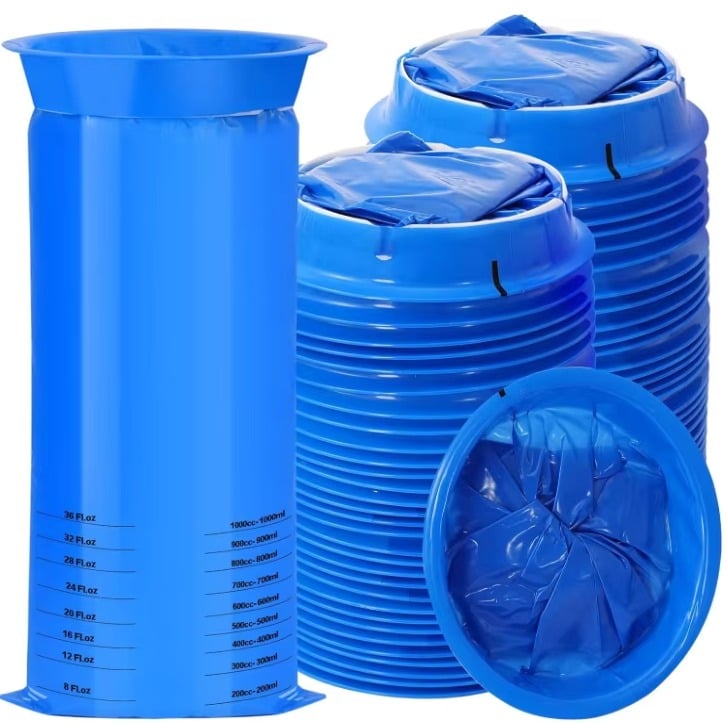
The EMS Reality: Seconds Matter, So Does Closure
Emergency medical services operate in a world where every second counts and hands are rarely free. A 2023 National EMS Survey found that 78% of EMS providers reported difficulty accessing standard emesis bags quickly, and 63% noted delayed access times exceeding five seconds with conventional tear-off designs. Five seconds might not sound like much, but in an emergency, it's the difference between catching vomit in the bag versus on the stretcher—or worse, on the provider.
The drawstring closure isn't just a nice-to-have feature for EMS professionals. It's a functional necessity that addresses specific operational challenges: one-handed operation, rapid sealing in moving vehicles, and secure containment during transport. Understanding why drawstrings have become the preferred choice requires looking at how EMS crews actually work in the field.
One-Handed Operation: The Non-Negotiable Feature
Paramedics and EMTs rarely have both hands available during patient care. One hand might be securing an airway, starting an IV, or stabilizing a cervical spine. The other hand needs to handle the emesis bag—and do it without looking down for too long.
Drawstring closures enable true one-handed operation. The user can hold the bag's rigid rim with one hand, guide it into position, and after use, simply pull the drawstring to cinch the opening closed. There's no fumbling with adhesive strips that require peeling and pressing, no twisting that demands fine motor control, and no hunting for a separate closure mechanism.
This matters more than casual observers might realize. Field trials of next-generation emesis bag designs with tactile orientation indicators showed a 92% improvement in first-attempt access speed. The drawstring, combined with intuitive bag geometry, allows crews to maintain focus on the patient rather than on the equipment.
A paramedic working in a busy urban system once described the difference during a debrief: “With the old twist-and-tuck bags, I'd have to stop what I was doing, use both hands to close it properly, and hope it held. With the drawstring, I pull it tight one-handed while keeping my other hand on the patient's airway. It doesn't sound like much until you're in that situation.”
Sealing Integrity in Motion: Why Drawstrings Outperform
Ambulances don't travel on smooth roads. They navigate potholes, speed bumps, and sudden stops while carrying patients who may be actively vomiting. Any closure system that relies on friction alone—like twist-and-tuck—is vulnerable to coming undone with vibration and movement.
Drawstring closures create mechanical cinching that actually tightens with movement rather than loosening. The cord compresses the bag material around the contents, and any jostling tends to pull the drawstring tighter rather than releasing it. This is the opposite of what happens with twist closures, which can unwind as the bag shifts.
Some drawstring designs incorporate a locking feature—often a notched ring or a cord lock—that prevents the cinched closure from loosening. This adds an extra layer of security that's particularly valuable during extended transports or when the bag might be jostled during transfer from stretcher to hospital bed.
A 2023 simulation study evaluating emesis bag performance during high-G maneuvers found that multi-layer liners with secure closures reduced leakage incidents by 67% compared to single-ply designs. While that study focused on material performance, the closure mechanism was identified as a critical factor in achieving those results.
Infection Control and Biohazard Containment
Beyond the immediate mess, closure integrity directly impacts infection control. Vomit can contain norovirus, rotavirus, C. difficile, and a range of other pathogens. A closure that fails during transport creates exposure risks for the crew, the patient, and anyone else in the confined space of an ambulance cabin.
OSHA's Bloodborne Pathogens Standard (29 CFR 1910.1030) requires that regulated waste be contained in closable, leak-proof containers. Drawstring closures, when properly designed and executed, meet this requirement more reliably than friction-based alternatives. The mechanical cinching creates a seal that's both leak-proof and odor-resistant—two attributes that OSHA inspectors look for during facility audits.
Emesis bags with drawstring closures also support proper waste stream segregation. Once sealed, the bag can be placed directly into a biohazard waste container without additional handling. This reduces the number of touch points and minimizes the risk of secondary contamination.
The Patient Experience Factor
EMS professionals care about patient dignity, even in chaotic situations. No one wants to be remembered as the provider who handed a patient a bag that leaked or smelled up the ambulance.
Drawstring closures contribute to a better patient experience in several ways. The secure seal prevents leaks that could soil the patient's clothing or the stretcher. The odor containment—which drawstrings support by creating a tight seal—reduces the embarrassment patients often feel after vomiting in front of strangers. And the one-handed operation means the provider can maintain a calm, professional demeanor rather than fumbling with equipment.
Survey data shows that around 70% of people who use emesis bags prefer closures that “just feel right” when they need them most. For patients, that translates to confidence that the bag will work as expected. For providers, it means one less thing to worry about during an already stressful call.
Comparing Closure Types: A Practical Breakdown
| Closure Type | One-Handed Operation | Seal Reliability in Motion | Odor Containment | Ease of Disposal |
|---|---|---|---|---|
| Twist-and-tuck | Poor | Low | Poor | Moderate |
| Adhesive strip | Moderate | Moderate | Moderate | Good |
| Drawstring | Excellent | High | High | Excellent |
| Twist-and-lock notch | Good | High | High | Excellent |
The drawstring consistently outperforms across the metrics that matter most to EMS professionals: one-handed usability, reliability in motion, and secure containment through disposal.
Limitations Worth Acknowledging
Drawstring closures aren't perfect for every scenario. They require the user to pull the cord with enough force to create a proper seal—not difficult, but something that requires a moment of attention. In extreme cold, some drawstring materials can stiffen, though quality manufacturers use cold-flexible polymers to mitigate this issue.
Cost is another consideration. Drawstring bags typically cost slightly more than basic twist-and-tuck models. For high-volume users like busy emergency departments or large ambulance services, that incremental cost adds up. However, when weighed against the cost of contamination incidents, vehicle decontamination, and crew exposure management, the premium is generally justified.
Why the Industry Is Moving This Direction
The trend toward drawstring closures in emesis bags isn't accidental. Major manufacturers and healthcare procurement organizations are increasingly specifying drawstring designs in their tenders. The reasons align with what EMS professionals have been saying for years: drawstrings work better in the real world.
Field data supports this preference. A European air ambulance service that switched to polymer-lined emesis bags with secure closures reported 40% fewer cabin decontamination events and 31% faster patient transfers over a six-month period. While that service used multiple bag features, crew members consistently highlighted the one-handed sealing mechanism as critical during time-sensitive emergencies.
Xiangwo Industry manufactures emesis bags with drawstring closures that meet ISO 13485 standards and undergo SGS testing for seal integrity and odor barrier performance. The company's OEM/ODM capabilities allow healthcare providers and EMS agencies to specify drawstring designs that match their operational requirements.
Table of Contents
- The EMS Reality: Seconds Matter, So Does Closure
- One-Handed Operation: The Non-Negotiable Feature
- Sealing Integrity in Motion: Why Drawstrings Outperform
- Infection Control and Biohazard Containment
- The Patient Experience Factor
- Comparing Closure Types: A Practical Breakdown
- Limitations Worth Acknowledging
- Why the Industry Is Moving This Direction