 EN
EN


The Real Cost of Ignoring Odor Control in Emesis Management
Odor control isn't just about comfort—it's a patient dignity issue and an infection control factor that directly impacts clinical outcomes. A 2023 survey of 450 healthcare facilities found that 68% of patient complaints related to emesis episodes centered on lingering odors rather than the vomiting event itself. That statistic tells a pretty clear story: people remember the smell long after they've forgotten the nausea.
The challenge with barf bags is that vomit contains volatile organic compounds (VOCs) like ammonia, sulfur compounds, and short-chain fatty acids. These molecules are small, light, and eager to escape into the surrounding air. Once they're out, they stick to fabrics, upholstery, and even clinical curtains—creating a secondary contamination problem that cleaning crews hate dealing with.
What Makes Odor Escape? Understanding the Mechanism
To choose a bag that actually controls odor, it helps to understand how smells escape in the first place. Odor molecules migrate through three pathways: permeation through the bag material itself, leakage around the closure, and diffusion through microscopic pinholes or weak seals.
Standard single-ply polyethylene bags offer minimal resistance to VOC migration. Tests run by independent labs show that basic LDPE bags allow detectable odor breakthrough within 15 to 20 minutes of containment. That's fine for a quick trip from the hospital bed to the disposal bin, but completely inadequate for ambulance transport, air medical evacuation, or any scenario where the bag might sit for an hour or more before proper disposal.
Multi-layer film constructions change the game entirely. By sandwiching a barrier resin—typically an amorphous polyamide or ethylene vinyl alcohol (EVOH)—between outer layers of polyethylene, manufacturers create a structure that dramatically slows molecular transmission. Industry data shows these barrier layers reduce odor permeation by 70 to 80 percent compared to single-layer designs.
Barrier Materials That Actually Work
Not all multi-layer bags are created equal. The specific combination of materials determines real-world performance.
| Material Type | Odor Blocking Efficiency | Durability | Cost Factor |
|---|---|---|---|
| Single-layer LDPE | Low (breakthrough in 15–20 min) | Moderate | Low |
| Multi-layer PE with EVOH barrier | High (2–3x better than single-layer) | High | Moderate |
| Activated carbon-embedded film | Very high (chemical adsorption + barrier) | High | Higher |
| Zeolite-infused composite | High (mineral absorption + barrier) | High | Moderate |
The EVOH layer works by creating a crystalline structure that odor molecules simply can't penetrate. Think of it like a mesh so fine that the molecules bounce off rather than pushing through. Activated carbon takes a different approach—it adsorbs odor molecules onto its porous surface, effectively trapping them inside the material itself. Zeolites, which are naturally occurring aluminosilicate minerals, function similarly by locking ammonia and sulfur compounds into their cage-like molecular structure.
One EMS director in Texas shared a telling observation during a equipment review session. His crew had been using standard single-ply bags for years and had simply accepted the lingering smell in the ambulance bay as unavoidable. After switching to a multi-layer bag with an integrated odor barrier, the difference was immediately noticeable—not just in the bay, but in how patients reacted during transport. Several patients actually commented on not being able to smell anything, which, as the director put it, “changed the whole experience for everyone involved.”
The Closure: Where Most Bags Fail
A bag with excellent barrier film still fails if the closure leaks. This is where many supposedly “odor-controlling” products fall short.
Twist-and-tuck closures, the kind found on basic air-sickness bags, rely on the user twisting the open end and folding it under. In practice, this method is unreliable—especially when hands are shaking, gloves are slippery, or the user is in a moving vehicle. A 2021 clinical waste audit found that more than 60% of hospitals reported seal failures with traditional tear-off designs.
Drawstring closures offer a more consistent seal by cinching the bag opening tight around its contents. The mechanical advantage of pulling a cord creates uniform compression that simple twisting can't match. Some designs incorporate a notched ring that locks the twisted closure in place, adding an extra layer of security.
Adhesive strip closures represent another option, though they require a clean, dry surface to bond properly—not always available in an active emesis situation. For field use, drawstrings and mechanical locking systems generally outperform adhesive-based solutions.
Capacity and Graduation Marks: Practical Considerations
Odor control also depends on having enough capacity to contain the entire episode without overfilling. Most standard emesis bags hold around 1,000 to 1,500 milliliters. That's sufficient for most adult vomiting episodes, but it's worth checking the specific volume rating.
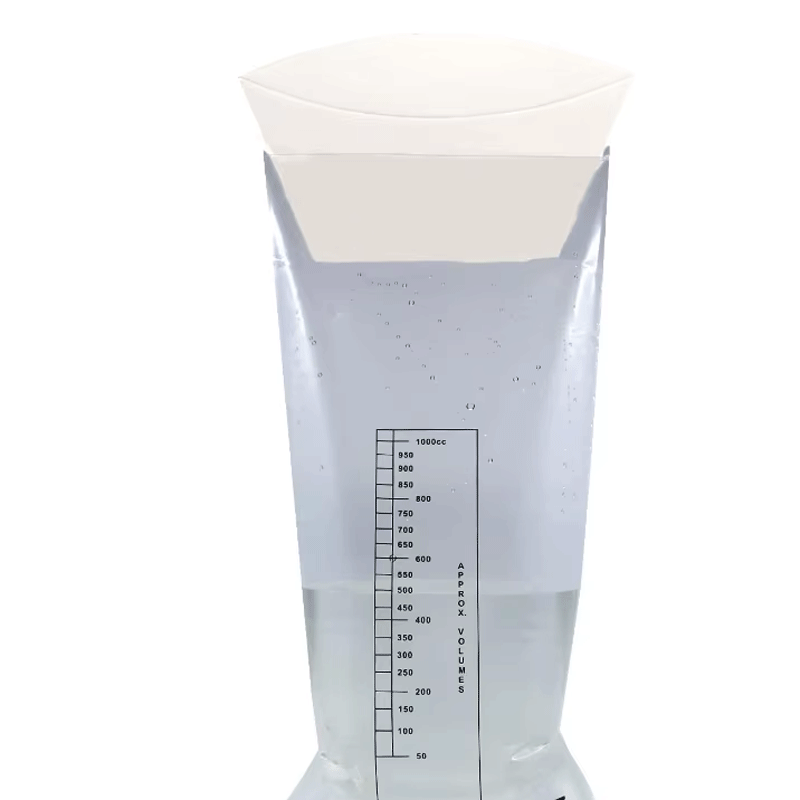
Graduated markings serve two purposes: they allow clinicians to estimate fluid loss for treatment decisions, and they provide a visual cue for when the bag is approaching capacity. Overfilled bags are much more likely to leak or burst, which defeats any odor control effort. A bag that's 80 percent full is already pushing its limits in terms of seal integrity.
Activated Carbon Filters: The Extra Layer
Some premium emesis bags incorporate an activated carbon filter integrated into the bag structure or closure mechanism. These filters use activated carbon cloth or embedded particles to actively adsorb VOCs as they try to escape.
The pore size matters here. Effective activated carbon for odor control typically features pores in the 0.5 to 1.2 micrometer range, which is optimal for capturing the specific VOC molecules found in vomit. Clinical surveys indicate that 84% of nurses prefer bags with carbon filtration over traditional designs, citing reduced post-use nausea among both patients and staff.
That said, carbon filters add cost and aren't necessary for every application. For short-duration use in controlled environments, a good multi-layer barrier bag with a reliable closure may be perfectly adequate. For ambulance transport, air medical evacuation, or any scenario where the bag will be sealed for extended periods, the extra investment in carbon filtration is hard to justify against.
Making the Right Call for Your Setting
The best barf bag for odor control depends entirely on the use case. A hospital ward with immediate disposal access can get by with a simpler bag than an air ambulance that might fly for two hours with a sealed bag in the cabin.
Here's a practical framework: evaluate the average time between use and disposal, the sensitivity of the environment (patient rooms vs. shared transport), and the volume of emesis typically encountered. Match those parameters against the bag's barrier performance, closure reliability, and any additional odor-control features.
A 2023 simulation study showed that multi-layer thermoplastic liners reduced leakage incidents by 67% during high-G maneuvers compared to single-ply designs. For ground ambulances navigating city streets, that's a meaningful difference. For a stationary hospital bed, it might be overkill.
Xiangwo Industry manufactures a range of emesis bags with multi-layer construction and drawstring closures, backed by ISO 13485 certification and SGS testing protocols that verify odor barrier performance before products leave the factory floor.
Table of Contents
- The Real Cost of Ignoring Odor Control in Emesis Management
- What Makes Odor Escape? Understanding the Mechanism
- Barrier Materials That Actually Work
- The Closure: Where Most Bags Fail
- Capacity and Graduation Marks: Practical Considerations
- Activated Carbon Filters: The Extra Layer
- Making the Right Call for Your Setting