 EN
EN


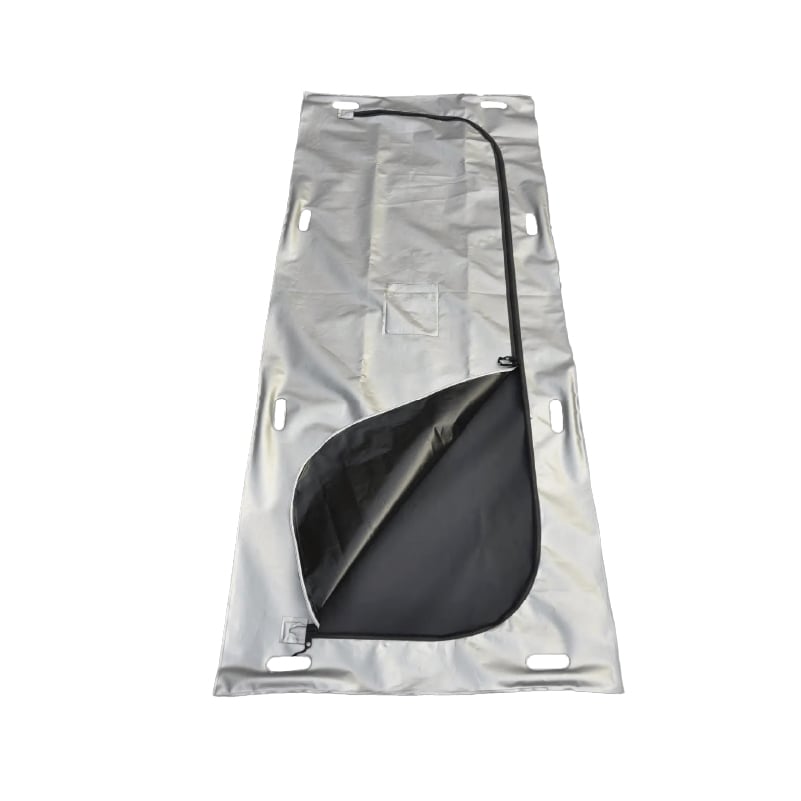
The Unseen Risks in Post-Mortem Handling
Funeral bags—also called body bags or post-mortem pouches—serve a purpose that extends far beyond dignified containment. Their primary function is to protect handling personnel from exposure to bloodborne pathogens and other potentially infectious materials. This is not a theoretical concern. The Occupational Safety and Health Administration (OSHA) explicitly regulates the containment of body fluids through its Bloodborne Pathogens Standard, and body bags fall squarely within the scope of that regulation.
The risks are real. Blood and other bodily fluids can carry hepatitis B, hepatitis C, HIV, and a range of other infectious agents. When a body bag fails—whether through seam rupture, zipper failure, or puncture—the consequences for the person handling it can be severe. That is why leak-proof construction is not a feature; it is a non-negotiable requirement.
What OSHA Regulation 3130 Actually Requires
OSHA Regulation 3130, which covers occupational exposure to bloodborne pathogens, sets clear expectations for containment of body fluids. While the regulation does not specify a particular brand or model of body bag, it does require that containers used for regulated waste—including human remains—must be closable, leak-proof, and properly labeled.
In practice, this means funeral bags must be constructed in a way that prevents any fluid from escaping during handling, transport, and storage. Heat-sealed seams are the industry standard for meeting this requirement. Stitched seams alone do not provide adequate protection because the needle holes create potential pathways for fluid migration. Electronic heat sealing melts the material together at the seam, creating a continuous, impermeable barrier.
Body bags that comply with OSHA 3130 typically feature:
-
Heat-sealed or high-frequency welded seams
-
Seams that are folded, sewn, and sealed (not just stitched)
-
Materials that are puncture-resistant and tear-resistant
The Zipper: A Critical Failure Point
The zipper is arguably the most vulnerable component of any funeral bag. A failed zipper can compromise the entire containment system, and in biohazard contexts, that failure is not merely inconvenient—it is dangerous.
Leak-proof funeral bags use heavy-duty zippers that are specifically designed for this application. Common specifications include rust-proof nylon zippers with interlocking sliders. Some designs feature envelope-style or curved zippers that reduce stress on the closure and provide a more secure seal. Dual-zipper configurations with two lockable pulls are also available, allowing the bag to be opened and closed at any point while maintaining containment.
The zipper must also resist corrosion. Body bags may be stored for extended periods, and exposure to fluids during use can accelerate degradation of standard metal zippers. Nylon or other corrosion-resistant materials are preferred for this reason.
Beyond OSHA: The Practical Realities of Field Use
Meeting OSHA standards is the baseline. But anyone who has worked in mortuary services, disaster response, or healthcare knows that real-world conditions often exceed what regulations anticipate.
Consider a mass-casualty incident. Body bags may need to be stacked, transported over rough terrain, or stored in less-than-ideal conditions. A bag that is leak-proof under ideal laboratory conditions may fail under the weight of multiple stacked bags or during extended transport. This is why many specifications call for 100% leak-proof seams—not just "leak-resistant".
Thickness also matters. Many body bags are manufactured with material thicknesses of 10 mil or more. Thicker materials offer greater puncture resistance and reduce the risk of tears during handling. Some bags are also tested for static lift strength, with capacities exceeding 450 pounds.
A Decontamination Team's Wake-Up Call
A hospital decontamination team in the Pacific Northwest learned this lesson the hard way. During a routine transfer of remains from a patient who had tested positive for a bloodborne pathogen, a standard-issue body bag split along a stitched seam. The leak was minor—a few ounces of fluid—but the exposure risk was significant. The team had to undergo post-exposure prophylaxis and the entire transfer area required extensive decontamination.
The hospital subsequently reviewed its procurement specifications and switched to bags with heat-sealed seams and heavy-duty zippers. The cost difference per bag was marginal, but the change eliminated seam failures in subsequent transfers. The team lead later noted that the hospital had been buying the cheaper bags for years without realizing the seam construction was inadequate for the pathogens they were dealing with.
Limitations and Appropriate Use
Leak-proof body bags are essential for biohazard safety, but they are not indestructible. Puncture from sharp objects—such as bone fragments or medical devices left in place—can compromise even the best-constructed bag. Proper handling procedures should include inspection of the bag before use and careful positioning of the remains to minimize stress on seams and zippers.
These bags are also single-use by design. Reuse is not recommended, as cleaning and disinfection processes can degrade the materials and compromise the leak-proof properties.
Manufacturing Standards That Matter
The difference between a reliable funeral bag and one that fails at a critical moment often comes down to manufacturing quality. Seam construction, zipper selection, and material choices are all variables that determine whether a bag will perform as expected.
Manufacturers like Dongguan Xiangwo Industry Co., Ltd. approach these products with an understanding that the stakes are high. Their focus on heat-sealed seams and corrosion-resistant zipper components reflects a commitment to meeting OSHA 3130 requirements—not as a checkbox exercise, but as a genuine safety imperative. In biohazard containment, the details that seem small during manufacturing are the details that matter most when a bag is in use.