 EN
EN


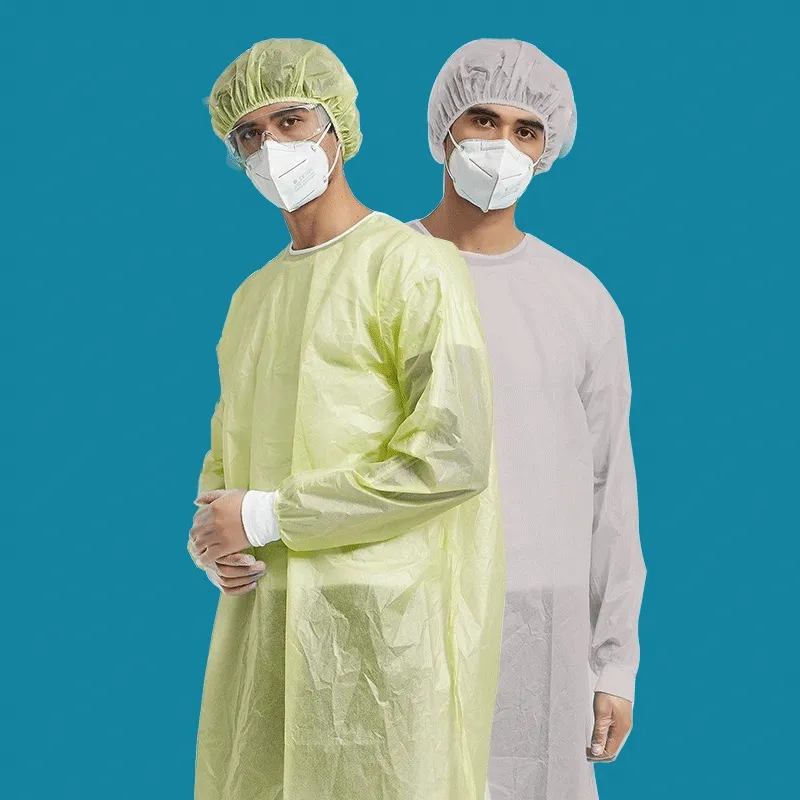
Understanding Isolation Gown Barrier Protection and Industry Standards
The Role of AAMI Level Ratings for Isolation Gowns in Clinical Settings
The protection levels for isolation gowns get their standards from something called the AAMI PB70 framework. Basically, this system sorts gowns into four different categories depending on how well they resist fluids. At the lowest end we have Level 1 gowns meant for situations where there's not much risk, like during routine patient care. These can handle just 1.5 pounds per square inch of water pressure before leaking. Contrast that with Level 4 gowns used in surgery rooms which can actually stand up to over 50 psi. Some recent research has found that around one out of every four healthcare professionals experiences problems with fluids getting through their gowns when using lower rated options. This clearly shows why it matters so much to match the right gown rating with the actual risks present in different medical settings.
| AAMI Level | Fluid Resistance | Common Use Cases | Key Testing Standard |
|---|---|---|---|
| 1 | Low | Routine patient assessments | AATCC 42 |
| 2 | Moderate | IV insertion, wound care | ASTM F3352 |
| 3 | High | Trauma care, ER procedures | AATCC 127 |
| 4 | Maximum | Surgical operations | ASTM F1670/F1671 |
Fluid Resistance and Barrier Protection Levels Defined by ASTM F3352 Standards
The ASTM F3352-19 standard quantifies isolation gown performance through synthetic blood penetration tests. Gowns must demonstrate <4g fluid absorption at critical zones to meet Level 3/4 certification. This standard complements AAMI ratings by providing measurable thresholds for viral and bacterial barrier effectiveness.
Hydrostatic Pressure Testing (AATCC 127) and Its Impact on Gown Selection
AATCC 127 evaluates a material's resistance to pressurized water penetration. Gowns passing 50cm water pressure (Level 4) reduce contamination risks in high-exposure surgeries by 63% compared to Level 2 alternatives. Research indicates double-layer Level 2 gowns fail to meet single-layer Level 3 hydrostatic requirements.
Impact Penetration Testing (AATCC 42) as a Measure of Real-World Fluid Exposure Defense
This test simulates splashes by projecting 500mL water at 1m/s velocity onto gown surfaces. Level 2 gowns allow ∆4.5g liquid penetration—critical for protecting against respiratory droplet exposure during intubation. Facilities using AATCC 42-validated gowns report 31% fewer HAIs in high-contact specialties like pulmonology.
Advanced Isolation Gowns in Infection Prevention and HAI Reduction
How Improved Barrier Protection Reduces Healthcare-Associated Infections (HAIs)
Better quality isolation gowns are making a real difference in cutting down hospital acquired infections thanks to their improved ability to block fluids and maintain structural strength. According to recent studies cited by Ponemon in 2023, hospitals that switch from standard issue gowns to ones rated at AAMI Level 3 or 4 see anywhere between 30 to 50 percent fewer infections overall. The connection here is pretty straightforward actually – these upgraded gowns just aren't letting germs pass through as easily during those risky moments when doctors are treating wounds or performing intubations where exposure levels are highest.
One of the most important things to consider when looking at protective gear is how to reduce what's called "strikethrough" - basically when fluids get through the material of the gown. Studies indicate that about a quarter of healthcare workers have seen this happen with standard gowns, and nearly half report tears happening during regular patient care activities. The newer models on the market tackle this problem by using multiple layers of special fabric construction. These materials meet or exceed the ASTM F3352 standard for water resistance, which means they can handle pressures equivalent to around 50 centimeters of water column height. This makes them much better at keeping out dangerous substances like bloodborne pathogens and other bodily fluids that pose infection risks.
Case Study: Reduction in Surgical Site Infections with High-Barrier Isolation Gowns
In early 2024, a large-scale study across 18 different hospitals showed something pretty remarkable - when they started using Level 4 isolation gowns during ortho and abdominal procedures, surgical site infections dropped by around 40%. The research team thinks this happened because these top-tier gowns just don't let microbes through as easily as cheaper options do. Testing showed they had less than 1% permeability according to AATCC 42 standards, which is basically nothing compared to what we see with standard protection gear. After making the switch, hospital staff actually followed proper gowning and ungowning procedures better too. Many nurses mentioned feeling much more confident about their protection while working, knowing they were wearing something that really works against those pesky pathogens.
Key outcomes:
- 62% reduction in Staphylococcus aureus transmission
- 28% fewer protocol deviations during extended surgeries
- $740k annual savings per facility in infection-related costs
These findings underscore the cost-benefit of matching gown performance to procedural risk levels, particularly in surgical environments.
Material Innovations Improving Durability and Performance of Isolation Gowns
Modern isolation gowns leverage nonwoven composite materials that achieve tensile strengths exceeding 35 N/cm² while maintaining flexibility—a 20% improvement over traditional spunbond polypropylene (ASTM D5035 testing data 2024). These multilayered fabrics integrate hydrophilic and hydrophobic zones, optimizing fluid repellency without compromising breathability during extended procedures.
A 2023 Journal of Healthcare Engineering study found gowns with cross-laminated polyethylene terephthalate (PET) layers demonstrated 40% higher tear resistance during simulated patient transfers (AATCC 122 wash durability protocol). This innovation directly addresses the 18% of isolation gown failures linked to seam stress fractures in high-mobility clinical tasks (CDC NIOSH 2024 risk analysis).
For barrier integrity under dynamic use, manufacturers now employ three-axis tensile testing that replicates real-world stresses like lateral reaching and crouching. Gowns meeting updated ANSI/AAMI PB70:2024 Level 3 criteria withstand over 12 psi hydraulic pressure without weepage—critical for containing viral loads during aerosol-generating procedures.
Evidence-Based Selection of Isolation Gowns by Clinical Risk Level
Matching AAMI Level Ratings for Isolation Gowns to Clinical Procedures
When hospitals match AAMI barrier protection levels to actual procedure risks, they cut down on wrong gown usage by around 38%, according to research from the AAMI Foundation in 2023. For everyday tasks like drawing blood or stitching wounds, Level 2 gowns work just fine since these are considered low-risk situations. But things change when dealing with emergencies such as putting tubes into patients' airways during resuscitation efforts or treating serious injuries where Level 3 protection becomes absolutely necessary. Looking at data collected across various healthcare settings in 2024 reveals something interesting too. Facilities following standardized gown protocols saw nearly 30% fewer hospital-acquired infections simply because staff were picking gowns that met specific fluid resistance standards set forth in ASTM F3352 guidelines. This practical approach not only saves money but also protects both patients and medical personnel alike.
Risk Stratification in Emergency vs. Routine Care Environments
Emergency departments use Level 3/4 isolation gowns 73% more frequently than outpatient clinics due to higher exposure risks from uncontrolled bleeding or infectious aerosols. Conversely, routine physical exams require only Level 1 protection, with AATCC 127 hydrostatic pressure tests confirming 95% efficacy against incidental fluid contact.
Controversy Analysis: Overuse of Level 4 Gowns in Low-Risk Settings
About half of healthcare workers grab those Level 4 isolation gowns even when doing stuff that doesn't require surgery, according to recent surveys, mostly because they think it's safer than following what AAMI actually recommends. But wait there was this study published last year in Environmental Technology and Innovation that looked at things differently. Researchers discovered that regular old Level 3 gowns managed to stop nearly all pathogens (like 99.3%) during situations rated as moderate risk. This finding has gotten people talking about updating our current safety rules. If hospitals switch back to using fewer high-level gowns where appropriate, the whole industry could save around twelve million dollars each year on materials alone.
FAQ
What is the AAMI PB70 framework?
The AAMI PB70 framework is a system of standards that classifies isolation gowns into four levels based on their fluid resistance capabilities.
What is the significance of AATCC 127 testing?
AATCC 127 testing evaluates a material's resistance to pressurized water penetration, which helps determine gown efficacy in high-exposure settings.
Why are Level 3/4 gowns preferred in emergency departments?
Level 3/4 gowns are preferred in emergency departments due to higher exposure risks, as they provide better protection against bleeding and infectious aerosols.
Are Level 4 gowns necessary for low-risk procedures?
No, Level 4 gowns are often overused in low-risk settings. Studies have shown that Level 3 gowns can effectively stop pathogens in moderate risk situations, suggesting the need for more accurate matching of gown level to clinical procedure risk.
What materials improve gown durability?
Modern isolation gowns use nonwoven composite materials and cross-laminated polyethylene terephthalate (PET) layers, which improve tensile strength and tear resistance, addressing seam stress fractures.
Table of Contents
-
Understanding Isolation Gown Barrier Protection and Industry Standards
- The Role of AAMI Level Ratings for Isolation Gowns in Clinical Settings
- Fluid Resistance and Barrier Protection Levels Defined by ASTM F3352 Standards
- Hydrostatic Pressure Testing (AATCC 127) and Its Impact on Gown Selection
- Impact Penetration Testing (AATCC 42) as a Measure of Real-World Fluid Exposure Defense
- Advanced Isolation Gowns in Infection Prevention and HAI Reduction
- Material Innovations Improving Durability and Performance of Isolation Gowns
- Evidence-Based Selection of Isolation Gowns by Clinical Risk Level
- FAQ