 EN
EN


Why Proper Technique Matters More Than Most People Realize
An emesis bag seems simple enough—open, catch, close, dispose. But in actual clinical practice, fluid leakage from improperly used vomit bags is surprisingly common. A 2023 review of incident reports from a major hospital network found that nearly 18% of emesis-related biohazard spills traced back to user error rather than product defects. The consequences go beyond an unpleasant cleanup. Leaked biological fluids carry pathogens, create slip hazards, and increase the risk of healthcare-associated infections for both staff and subsequent patients.
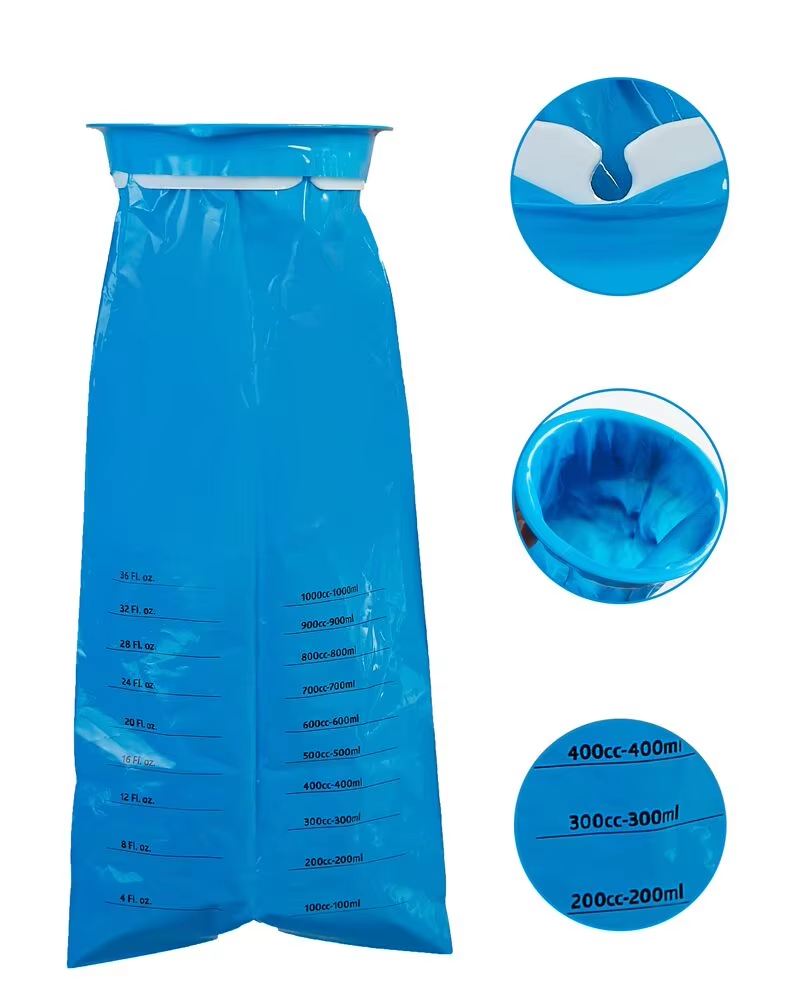
The device itself is straightforward: a disposable bag with a rigid or semi-rigid rim, typically holding between 1,000 and 1,500 mL, with a closure mechanism designed to seal contents after use. But the gap between how the bag is designed to work and how it actually gets used in the chaos of an emergency department or the confined space of an ambulance is where most failures occur. Understanding the correct technique is not just about following protocol—it is about preventing real, measurable harm.
Step-by-Step: From Opening to Secure Disposal
The process breaks down into five distinct phases, each with its own potential failure points.
1. Preparation and positioning. Before the bag is even presented to the patient, the healthcare worker should unfold it completely and shape the rim into an oval or funnel configuration. A partially unfolded bag creates a smaller target area and increases the likelihood of missing the opening. The rim should be positioned just below the patient's chin, tilted slightly forward so that any vomitus flows downward into the bag rather than pooling at the rim's edge.
2. Catching the emesis. The bag needs to be held close to the patient's mouth, but not pressed against the face. Pressing creates a seal that can actually impede the flow of vomitus and cause back-splatter. A gap of about two to three centimeters allows gravity to do its job while still containing the stream. If the patient is able to hold the bag themselves, the healthcare worker should guide their hands to the correct position rather than simply handing it over and stepping back.
3. Managing volume. Most emesis bags have graduated markings that allow clinicians to estimate fluid loss. But those markings are only useful if the bag is held upright during use. Tilting the bag to one side can cause the fluid level to read inaccurately and, more importantly, can allow liquid to reach the closure mechanism before the bag is sealed, compromising its integrity.
4. Sealing the bag. This is where the highest rate of failure occurs. The twist-and-lock closure mechanism found on many modern emesis bags requires a specific motion—twisting the top of the bag firmly and then securing it into the locking slot on the rim. A partial twist or a failure to lock the mechanism properly leaves the bag vulnerable to leakage during transport. Some bags feature an automatic inner seal that activates upon closure, providing an additional layer of security.
5. Disposal. Once sealed, the bag should be placed directly into a biohazard waste container. Carrying a sealed emesis bag across the room without a secondary container introduces unnecessary risk—a single puncture or a loose seal can turn a contained hazard into an environmental contamination event.
Common Mistakes That Compromise Leak Prevention
Even experienced clinicians make errors under pressure. The most frequent mistakes include overfilling the bag beyond its capacity, failing to twist the closure mechanism completely, and attempting to "reopen" a sealed bag to add more contents. Each of these actions dramatically increases the probability of leakage.
Overfilling is particularly problematic. When a bag exceeds its rated capacity, the fluid level reaches the closure zone before sealing can occur. The result is a wet seal that may not hold, even if the twist-and-lock mechanism is properly engaged. The 1,500 mL capacity commonly found in medical-grade emesis bags is not a suggestion—it is a limit based on the bag's physical dimensions and seal geometry.
Another overlooked issue is the orientation of the bag during transfer. Even a properly sealed bag can leak if it is carried upside down or placed on its side. The seal mechanisms used in most disposable emesis bags are designed to withstand gravitational pressure from the contents when the bag is upright. Inverting the bag reverses that pressure and can force fluid through the seal, especially if the bag was not sealed under ideal conditions.
A Case from the Emergency Department: What a Simple Error Cost
A Level 1 trauma center in the Midwest documented an incident in early 2023 that serves as a cautionary tale. A patient with severe gastroenteritis was given an emesis bag by a triage nurse who was pulled in multiple directions—handling intake paperwork, answering phone calls, and managing another patient simultaneously. The nurse handed the bag to the patient without demonstrating the twist-and-lock closure, assuming the patient would figure it out.
The patient used the bag, attempted to close it by folding the top over (a common instinctive action), and placed it on the bedside table. Thirty minutes later, the folded top gave way, and approximately 400 mL of vomitus spilled across the table, onto the floor, and into the seams of the bed. The room had to be closed for a full terminal clean, which took 45 minutes and delayed care for three subsequent patients. The total cost of that single incident—in cleaning supplies, staff time, and lost bed capacity—was estimated at over $2,000. A 15-second demonstration of the correct closure technique would have prevented the entire event.
The Role of Design Features in Leak Prevention
Not all emesis bags are created equal, and the design features built into the product have a direct impact on how easily correct technique can be executed. Three-layer construction—a soft non-woven inner layer for patient comfort, a super-absorbent polymer core to handle fluid volume, and a leak-proof polyethylene outer layer—provides a margin of safety even if the seal is not perfect.
These features work together to create a system that is forgiving of minor user errors. But they are not a substitute for correct technique. A bag with an advanced seal mechanism can still leak if the user fails to engage it properly. Conversely, a basic bag used with meticulous technique can perform perfectly. The combination of good design and proper training is what delivers consistent results.
Practical Training Recommendations for Clinical Staff
The most effective way to reduce emesis bag leakage is to treat proper usage as a skill that requires demonstration and practice, not just a verbal instruction. Simulation-based training—where staff practice with water-filled bags in a controlled setting—has been shown to reduce error rates by over 60% in some hospital systems. The training should cover not just the mechanics of the closure but also the ergonomics of positioning the bag, managing patient cooperation, and integrating the bag into the broader workflow of patient care.
It is also worth noting that different patient populations present different challenges. Pediatric patients may require smaller bags with child-friendly designs. Patients with limited hand strength or motor control may need assistance with the closure mechanism. Geriatric patients may have difficulty holding the bag in the correct position for extended periods. A one-size-fits-all training approach misses these nuances.
Manufacturers like Xiangwo have invested in design features that make correct usage more intuitive—clear volume markings, easy-grip rims, and secure closure systems that provide tactile feedback when properly engaged. With FDA, CE, and ISO 13485 certifications, the company's emesis bags are built to meet the demands of busy emergency departments, ambulances, and inpatient units while supporting the infection control protocols that keep patients and staff safe.
Table of Contents
- Why Proper Technique Matters More Than Most People Realize
- Step-by-Step: From Opening to Secure Disposal
- Common Mistakes That Compromise Leak Prevention
- A Case from the Emergency Department: What a Simple Error Cost
- The Role of Design Features in Leak Prevention
- Practical Training Recommendations for Clinical Staff