 EN
EN


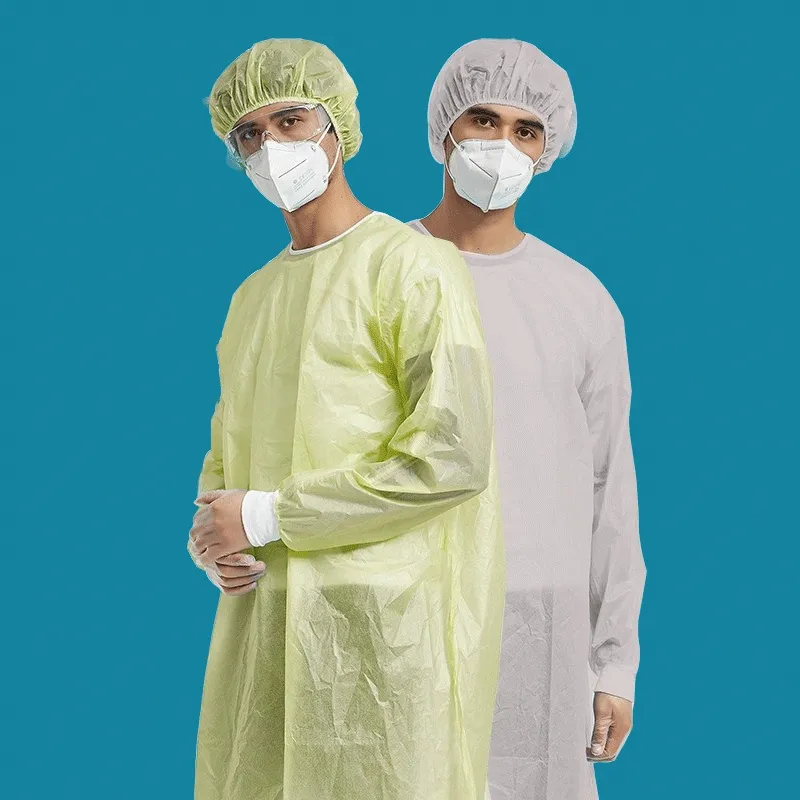
The Hidden Cost of Non-Breathable Barrier Protection
Running a 10-hour shift in a chemical plant or a pharmaceutical cleanroom while sealed inside a non-breathable coverall is a physical ordeal that goes far beyond simple discomfort. The human body dissipates about 60% of its excess heat through sweat evaporation. When a protective garment blocks that moisture from escaping, the body's core temperature begins a slow, steady climb. A 2015 CDC study on PPE ensembles used in West Africa found that coveralls with moderate to high impermeability caused workers to reach critical core temperature in significantly shorter time spans compared to breathable alternatives. That is not just an ergonomic issue—it is a safety hazard in its own right.
Heat stress impairs cognitive function, slows reaction times, and increases the likelihood of procedural errors. In environments where a single mistake can mean chemical exposure or contamination breach, the stakes are high. The Occupational Safety and Health Administration (OSHA) mandates that employers provide suitable PPE based on specific job hazards under 29 CFR 1910.132, but compliance alone does not guarantee that workers can actually perform safely through an entire shift. The gap between regulatory minimums and practical, sustained usability is exactly where breathable coveralls become not a luxury, but a necessity.
What Makes a Coverall "Breathable" in Practical Terms
Breathability in protective clothing is not a marketing buzzword—it is a measurable property. The key metric is Moisture Vapor Transmission Rate (MVTR), which quantifies how much water vapor can pass through a square meter of fabric over 24 hours. Standard microporous films, commonly used in disposable coveralls, achieve MVTR values in the range of 500 to 1,500 g/m²/day. Advanced breathable laminates push that number significantly higher, allowing sweat vapor to escape while still blocking liquid penetration.
The material science behind this involves a careful balancing act. Microporous films contain microscopic pores that are large enough for water vapor molecules to pass through but small enough to block liquid droplets and particulate matter. SMS (spunbond-meltblown-spunbond) fabrics, often used in breathable back panels, create a composite structure where the meltblown layer acts as a filter while the spunbond layers provide strength. This layered approach enables targeted breathability—putting ventilation where the body generates the most heat, typically across the back and underarms—without compromising protection in high-exposure zones.
Real-World Evidence from the Field: A Gulf Coast Refinery Case
Consider what happened at a petrochemical refinery along the Gulf Coast during a turnaround project in the summer of 2022. Maintenance crews were scheduled for 12-hour shifts replacing catalyst in a reactor unit, working in an area with low-level VOC (volatile organic compound) exposure that required Type 5/6 chemical protective coveralls. The safety manager initially specified standard non-breathable microporous coveralls based on cost considerations.
By hour six of the first shift, three workers had already rotated out due to heat-related symptoms—dizziness, nausea, and elevated heart rates. Production was delayed, and the contractor had to bring in additional crews to compensate for the reduced effective work time. After switching to breathable coveralls with higher MVTR ratings for the second shift, the rotation rate dropped by more than half. Workers completed their full scheduled hours with no heat-related incidents. The total cost of the breathable coveralls was marginally higher per unit, but the labor savings from reduced downtime and fewer crew rotations more than covered the difference. That project taught the safety team a lasting lesson: the cheapest coverall is rarely the least expensive option once productivity and incident costs are factored in.
Standards That Define Real Protection: ASTM F1670 and F1671
For coveralls used in environments where biological or liquid chemical hazards are present, two ASTM standards serve as the benchmark for material performance. ASTM F1670 evaluates a material's resistance to penetration by synthetic blood. ASTM F1671 goes a step further, testing resistance to blood-borne pathogens using a surrogate microbe (Phi-X174 bacteriophage) under continuous liquid contact. These are not optional checkboxes—they are rigorous pass/fail tests that determine whether a garment can genuinely protect against fluidborne threats.
| Standard | What It Tests | Test Agent | Application |
|---|---|---|---|
| ASTM F1670 | Synthetic blood penetration resistance | Synthetic blood | Screening test for liquid barrier performance |
| ASTM F1671 | Blood-borne pathogen penetration resistance | Phi-X174 bacteriophage | High-level barrier validation for biological hazards |
A coverall that passes ASTM F1671 has demonstrated that its material can withstand viral-sized particles under pressure. But passing these tests does not automatically mean the garment is comfortable for long shifts. The challenge for manufacturers is to engineer fabrics that meet these stringent barrier requirements while still allowing enough moisture transfer to keep the wearer functional over an eight- or ten-hour period. That is where the real engineering skill comes into play.
The Physiological Toll of Extended Wear and Why Breathability Mitigates It
The human body under physical work in a hot environment can produce up to one liter of sweat per hour. When that sweat cannot evaporate, the body loses its primary cooling mechanism. Core temperature begins to rise, and the heart works harder to pump blood to the skin's surface for radiative cooling—a process that becomes increasingly inefficient inside a non-breathable microclimate. Studies have shown that workers in impermeable PPE experience measurable declines in manual dexterity and decision-making accuracy after just two hours of continuous wear.
Breathable coveralls address this by allowing the sweat vapor to escape before it accumulates. The result is a lower relative humidity inside the garment, which means the body's evaporative cooling system can actually function. Independent physiological studies conducted by Empa, a Swiss research institute, have validated that advanced breathable fabrics significantly reduce heat load compared to traditional protective materials. Workers stay cooler, stay sharper, and stay on the job longer without the dangerous buildup of thermal stress.
It is also worth noting that breathability is not a binary property. Different work environments demand different levels of air exchange. A cleanroom operation with strict particulate control may require a different balance than a chemical splash zone. The key is matching the garment's breathability profile to the specific combination of hazards, work intensity, and shift duration.
When Breathable Coveralls Are Not the Right Choice
No piece of PPE is a universal solution, and breathable coveralls have their limitations. In environments with high concentrations of aerosolized chemical agents or where vapor-phase hazards are present, the microporous structure that enables breathability may not provide sufficient protection. Type 1 (gas-tight) or Type 2 (non-gas-tight) chemical protective suits are required for those scenarios, and breathability takes a back seat to complete barrier integrity.
Similarly, in applications involving pressurized liquid jets or immersion hazards, a breathable coverall may not offer the necessary liquid-tight seals. The selection process should always start with a thorough hazard assessment—identifying what exactly the worker needs to be protected from, for how long, and under what conditions—before deciding on breathability features.
That said, for the vast majority of industrial, pharmaceutical, and healthcare applications where the primary risks are particulates, light liquid splashes, and biological fluids, breathable coveralls offer the best balance of protection and wearability. The key is to evaluate them not as a compromise but as a purposeful engineering choice.
Manufacturers like Xiangwo have built their production capabilities around this understanding, offering FDA, CE, and ISO 13485-certified protective apparel that meets international standards while addressing the real-world needs of workers who wear these garments for entire shifts. With a 15,000-square-meter facility and experience serving over 60 countries, the company has the scale and quality systems to deliver breathable coveralls that perform consistently across diverse industrial and medical applications.
Table of Contents
- The Hidden Cost of Non-Breathable Barrier Protection
- What Makes a Coverall "Breathable" in Practical Terms
- Real-World Evidence from the Field: A Gulf Coast Refinery Case
- Standards That Define Real Protection: ASTM F1670 and F1671
- The Physiological Toll of Extended Wear and Why Breathability Mitigates It
- When Breathable Coveralls Are Not the Right Choice