 EN
EN


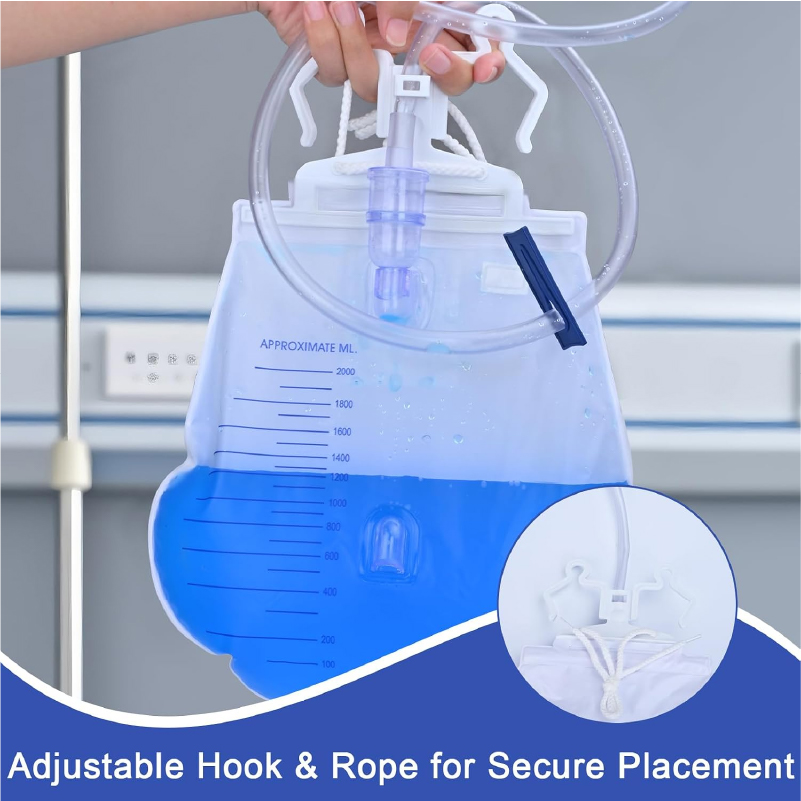
The Overlooked Public Health Hazard
Urine collection bags—often called pee bags or urine drainage bags—are used in hospitals, clinics, nursing homes, and home care settings around the world. They are a routine part of post-surgical care, urological management, and long-term catheterization. But for all their ubiquity, these bags represent a significant public health concern when they are not properly designed and handled.
The primary risk is infection. Catheter-associated urinary tract infections (CAUTIs) are among the most common healthcare-associated infections. The data is striking: when open urine drainage systems were the norm, infection rates reached as high as 97%. The introduction of sterile closed systems reduced that rate to approximately 8–15%. This dramatic reduction demonstrates the critical role that sealed system design plays in infection prevention.
What a Sealed System Actually Means
A sealed urine collection system is not simply a bag with a closure. It is an integrated system designed to maintain sterility from the catheter connection through to the drainage outlet. Key features include:
-
A non-return valve that prevents urine from flowing back toward the patient
-
A closed drainage pathway that minimizes opportunities for bacterial contamination
-
A drainage outlet that can be emptied without breaking the closed system
-
Materials that resist bacterial growth
The system is designed to be used as a single, continuous pathway. Break the pathway—by disconnecting the catheter from the bag, for example—and the risk of infection increases substantially.
| System Type | Infection Risk | Key Feature |
|---|---|---|
| Open system | ~97% infection rate | No barrier to contamination |
| Sterile closed system | ~8–15% infection rate | Sealed from catheter to outlet |
The Connection to Public Hygiene
The public hygiene implications extend beyond the individual patient. When urine collection bags leak or are improperly handled, the contents can contaminate surfaces, equipment, and even other patients. In healthcare facilities, this creates environmental reservoirs of bacteria that can persist for extended periods.
There is also the question of waste disposal. Sealed systems minimize the risk of spillage during transport and disposal, protecting waste handlers from exposure. This is particularly important in settings where waste may be handled by staff who are not directly involved in patient care and may not be aware of the specific risks.
A Hospital’s Experience with Closed Systems
A large teaching hospital in the Southeast had been tracking its CAUTI rates as part of a quality improvement initiative. The rates were consistently above the national benchmark, and the infection control team was struggling to identify the source of the problem.
After a detailed review, the team discovered that nurses on several units were disconnecting the urine drainage bags from catheters to empty them, rather than using the bag’s drainage outlet. This practice, while well-intentioned, was breaking the closed system and introducing bacteria.
The hospital implemented a standardized protocol that emphasized using the drainage outlet and maintaining the closed system. They also switched to bags with a more user-friendly drainage outlet design. Within six months, the CAUTI rate on the affected units dropped by a substantial margin. The change was so effective that the hospital expanded the protocol to all units.
Design Features That Support Hygiene
Not all urine collection bags are created equal. The design features that support public hygiene include:
A well-designed drainage outlet. If the outlet is difficult to use, staff may be tempted to bypass it. Outlets should be easy to operate with one hand and should provide a clean, drip-free drainage experience.
Clear measurement markings. Accurate measurement of urine output is clinically important. Bags with clear, easy-to-read graduations support accurate documentation without requiring the bag to be opened.
Anti-reflux valves. These prevent urine from flowing backward into the catheter, reducing the risk of bladder colonization.
Durable, puncture-resistant materials. The bag must withstand normal handling without leaking. Thinner materials may be cheaper but are more prone to puncture.
Limitations Worth Noting
Sealed urine collection systems are highly effective, but they are not foolproof. The closed system can be compromised in several ways:
-
Disconnecting the catheter from the bag
-
Using the bag beyond its recommended duration
-
Failing to empty the bag before it becomes overfilled
-
Using cleaning agents that degrade the bag material
There is also ongoing debate about the safety of reusing drainage bags. Most guidelines recommend against reuse, as cleaning and disinfection processes may not fully eliminate bacterial contamination.
The Role of Proper Training
Equipment is only as effective as the people using it. Proper training on urine collection bag use—including how to maintain the closed system, how to empty the bag without breaking the seal, and how to dispose of the bag safely—is essential.
Training should be hands-on and should include practical demonstrations. Written instructions alone are often insufficient, as staff may not fully understand the importance of maintaining the closed system until they see the consequences of failing to do so.
A Foundation for Infection Prevention
Sealed urine collection systems are a cornerstone of infection prevention in healthcare. The evidence is clear: closed systems dramatically reduce infection rates compared to open systems. For patients, this means fewer catheter-associated infections. For healthcare facilities, it means lower treatment costs and better quality metrics. For the public, it means a reduced risk of environmental contamination.
Manufacturers like Dongguan Xiangwo Industry Co., Ltd. have developed urine collection bags that incorporate the design features that matter most for infection prevention: anti-reflux valves, durable materials, and user-friendly drainage outlets. The company’s approach reflects a practical understanding that in infection control, the best designs are the ones that make it easy to do the right thing—and hard to do the wrong thing.